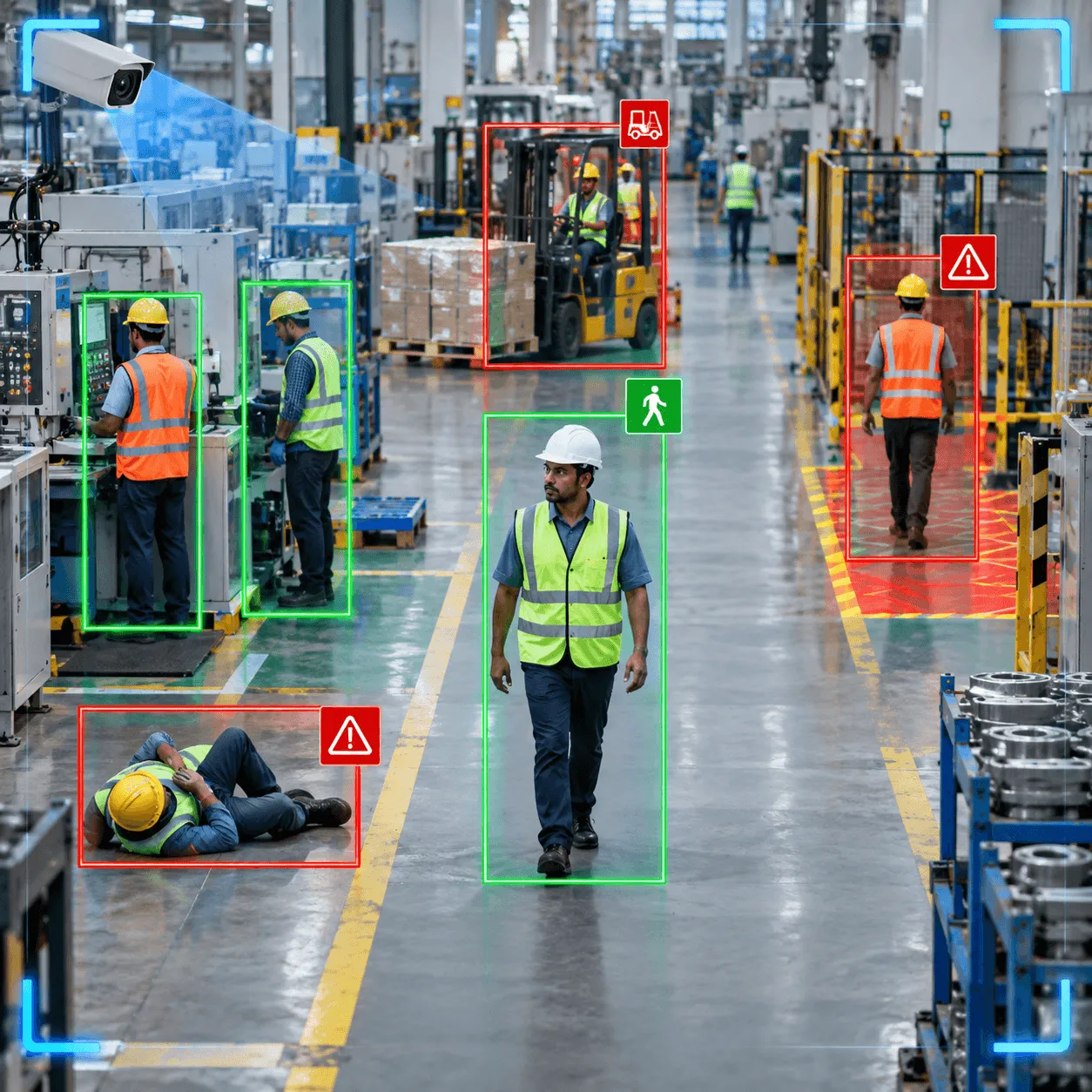
Next-Gen Computer Vision

Smarter Surveillance
Powered by AI

Transform passive video feeds into actionable intelligence. Leverage AI-powered video analytics, smart CCTV, object detection, people counting, and facial recognition for proactive security and operational insights.

IP Cameras

Standard & RTSP

VCABox AI Engine

Real-Time Processing

Useful Insights

Alerts • Dashboards • Reports

What is Video Analytics?

Video analytics, fundamentally transformed by deep learning, represents the automation of video understanding.

While traditional CCTV networks rely entirely on human operators gazing at grids of screens—an incredibly fatiguing and error-prone process—AI video analytics shifts the paradigm from passive observation to active, intelligent surveillance.

These systems are trained to mimic human optic interpretation, enabling them to comprehend exactly what is occurring on screen. Whether it's robust object detection identifying a stray bag, or picking up on anomalous movements, smart CCTV tirelessly analyzes every frame.

By turning unstructured video data into actionable insights, AI-driven computer vision has become the pivotal foundation of modern security and business intelligence.

Proactive Security

Zero Operator Fatigue

Threat Detection Accuracy 99.9%

Core Features

Advanced visual capabilities powering modern intelligent camera networks.

Object Detection

Identify specific defined objects in real-time.

Face Recognition

Accurately recognize known or unknown individuals.

Vehicle Detection

Track vehicle types, colors, and movements securely.

People Counting

Compute occupancy and foot traffic accurately.

Crowd Analysis

Evaluate density and behaviors in public spaces.

Intrusion Detection

Detect an unauthorized person in restricted perimeters.

Heat Mapping

Analyze motion patterns and high-activity zones.

License Plate Recognition

Capture and log alphanumeric plate info instantly.

Custom AI Solutions

Any specific video-based challenge can be solved with tailored AI models.

Why Adopt
Smart Surveillance?

Deploying computer vision transforms your camera network from a reactive forensic tool into a proactive operational asset.

Real-time monitoring

Instantaneous processing detects anomalies the second they happen.

Reduced manual effort

Eliminates the need for humans to stare at blank screens, saving dramatic labor costs.

Better security insights

Rich metadata gives context to incidents, improving response quality.

Intelligent automation

Automatically trigger lockdowns, alarms, or lighting based on visual events.

Scalable surveillance

Software can monitor thousands of camera feeds simultaneously without fatigue.

Time to Detect
Under 100ms
False Alarm Reduction
Up to 95%
Simultaneous Tracking
Unlimited Targets

How It Works

Three seamless steps transforming raw pixels into actionable intelligence.

1. Camera Input

Standard IP cameras capture high-definition video streams and send frames continuously.

2. AI Processing

Deep learning neural networks analyze each frame, executing complex object detection algorithms in milliseconds.

3. Smart Insights

The console generates clean metadata, visual bounding boxes, and instant push alerts for administrators.

Industry Use Cases

Smart Cities

Retail

Offices

Traffic Monitoring

Manufacturing

Healthcare

Education

Warehouses

Frequently Asked Questions

Quick answers regarding intelligent security systems.

What is AI video analytics?

AI video analytics refers to the use of artificial intelligence algorithms to automatically analyze video content in real-time, extracting meaningful data, recognizing patterns, and triggering alerts without constant human monitoring.

How does intelligent surveillance differ from traditional CCTV?

Traditional CCTV requires constant human observation and mostly records footage for later review. Intelligent surveillance proactively monitors feeds, detects anomalies, and alerts operators immediately.

Can existing cameras be upgraded?

Yes, most modern IP cameras can be integrated with AI processing software on edge devices or in the cloud without replacing the physical camera hardware.

Is facial recognition legal?

Legality depends heavily on regional privacy laws (like GDPR or CCPA). It requires strict adherence to data protection, anonymization, and consent policies when deployed in public.

How accurate is object detection?

Modern deep learning models achieve over 95% accuracy in object detection under optimal lighting and camera positioning conditions.

Are AI systems prone to false alarms?

While early motion detection generated many false alarms (e.g., shadows, animals), AI-based object classification significantly reduces these by understanding exactly what it is looking at.

What bandwidth is required for smart CCTV?

Edge processing models require very little bandwidth, as analysis happens on-site and only metadata or alert clips are sent to the cloud. Cloud-based analysis requires significant, stable upload speeds.

How is data privacy maintained?

Privacy can be maintained via face blurring, metadata-only storage (no video retention), strict access controls, and encrypted data transmission protocols.

Does weather affect the analytics?

Heavy rain, fog, or snow can obscure lenses and reduce AI accuracy. Using thermal cameras alongside visual sensors mitigates weather-related performance drops.

How fast is real-time processing?

Edge devices typically process frames and generate actionable alerts within milliseconds, essentially achieving instantaneous real-time response.

Can it track individuals across multiple cameras?

Yes, advanced algorithms use Re-Identification (ReID) to track specific subjects based on clothing, gait, and features across entirely separate camera fields of view.

What is the ROI of implementing this?

ROI is achieved through reduced manual security labor costs, prevention of theft/loss, optimized facility usage via analytics, and faster incident resolution times.

Get in Touch

Have questions about specific analytic implementations? Reach out.